Brass: Horn, Trumpet, Cornet, Trombone, Baritone, Euphonium, and Tuba
How can I determine my playing level?
| LAYP Playing Level | CM Level | RCM Grade | ABRSM Grade |
| 5-6 | 4-5 | 4-5 | 3-4 |
| 7-10 | 6-8 | 6-8 | 5-6 |
| 11-12 | 9-11 | 9-10 | 7-8 |
Our Playing Level 7-10 are similar to RCM Grade 6-8 or ABRSM Grade 5-6
Our Playing Level 11-12 are similar to RCM Grade 9-10 or ABRSM Grade 7-8
CM syllabus can be purchased at the MTAC Teacher Portal store.
Click here to see RCM syllabus.
Click here to see ABRSM syllabus
Q: I’m participating in a certificate or competition program other than CM, RCM, ABRSM, ASTACAP, SYMF, Satori, WMCF, etc. How can I determine my playing level in this case?
A: Discuss this playing level (above) with your private instructor, teacher, section coach, or director. They can easily determine your playing level using this chart.
| LAYP Playing Level 5 – 6 Audition Requirements | |
| Once you’ve determined your playing level, choose one of the following audition types. |
Audition Type 1: This option may be suitable for you if you have participated in a school music program, such as concert band, symphonic band, wind ensemble, marching band, or full orchestra, while also taking private lessons.
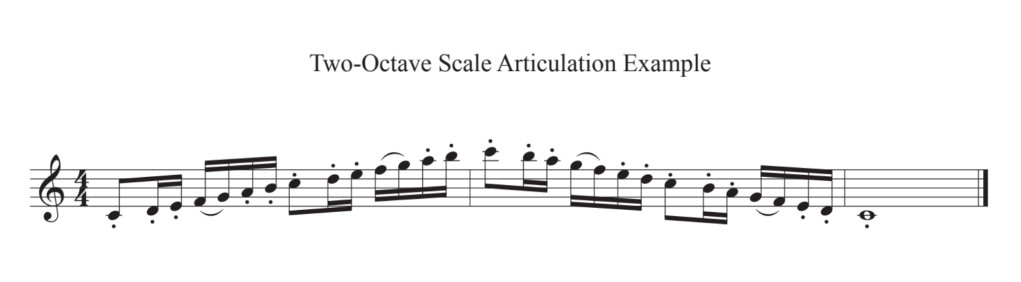
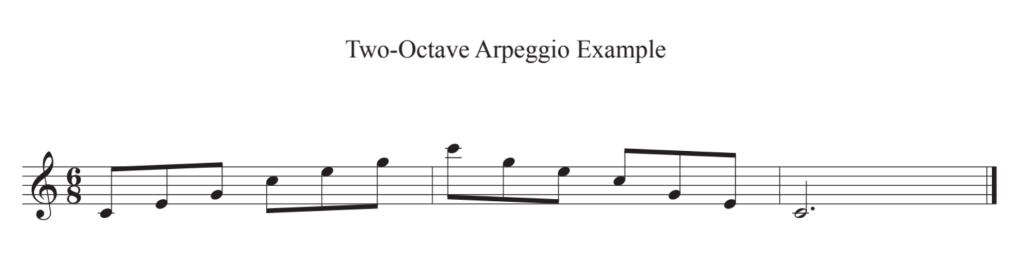
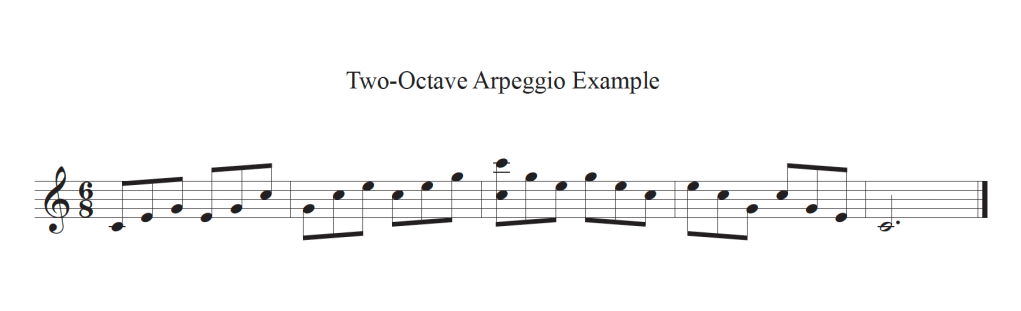
| Scale | 1. Play a scale, arpeggio (tonic), and chromatic scale in one & half, or two octaves (ascending & descending) at the suggested tempo (quarter note = 100–144), or as fast as possible to show fluency in the key of your solo piece. 2. If you’re playing multiple pieces in different keys, choose one key to demonstrate. 3. If your solo piece is in a minor key, play the melodic minor scale. For atonal or non-traditional pieces, play either F-sharp major or E-flat melodic minor scale. |
| Selections | Select and play three short pieces from band method books like Essential Elements for Band or Standard of Excellence. |
| Excerpts | 1. Select and play three excerpts from band or orchestra music. 2. Excerpts from your current band/orchestra pieces are acceptable. |
| Length | 1. The video length will depend on your selections and excepts. 2. Suggested length: 2-7 minutes |
Audition Type 2: This option is suitable for you if you have participated in a certificate program, such as CM, RCM, ABRSM, etc., or if you take private lessons at a location like your home, a private studio, institute, conservatory, school, music academy, community music program. It’s also ideal if you participate in ensembles such as a local youth orchestra, concert band, wind ensemble, symphonic band, community orchestra/band, or school orchestra/band.
| Scale | 1. Play a scale, arpeggio (tonic), and chromatic in one & half, or two octaves (ascending & descending) at the suggested tempo (quarter note = 100–144), or as fast as possible to show fluency in the key of your solo piece. 2. If your solo piece is in a minor key, play the melodic minor scale. 3. For atonal or non-traditional pieces, play either F-sharp major or E-flat melodic minor scale. |
| Etude | 1. Play one etude. 2. If it’s shorter than 24 measures, add another etude. |
| Solo | 1. Play one solo piece. 2. If it’s shorter than 24 measures, add another solo piece. |
| Length | 1. The video length will depend on your etude and solo piece. 2. Suggested length: 2-7 minutes |
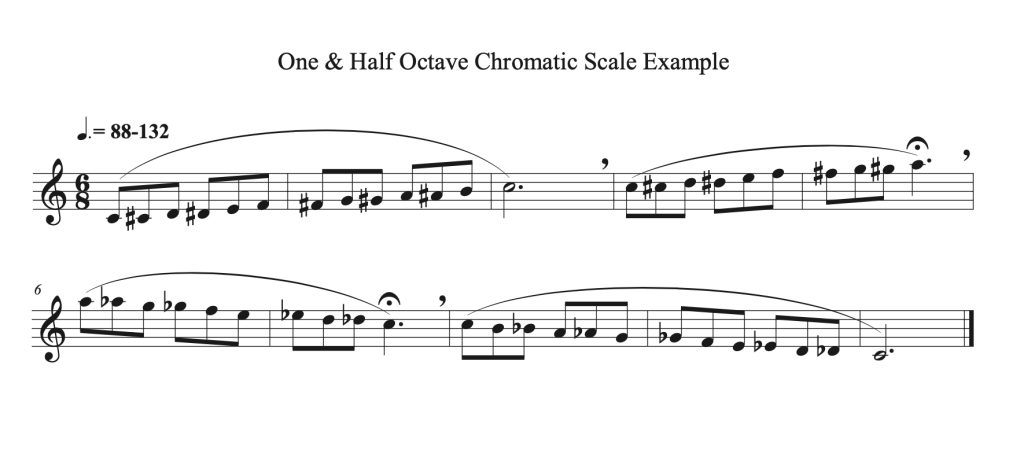

1) You may start on a lower or higher playable note than the examples above, depending on your instrument’s range.
2) Play maximum octave range of your instrument.
| LAYP Playing Level 7 – 10 Audition Requirements | |
| Once you’ve determined your playing level, choose one of the following audition types. |
Audition Type 1: This option may be suitable for you if you have participated in a school music program, such as concert band, symphonic band, wind ensemble, marching band, or full orchestra, while also taking private lessons.
| Scale | 1. Play a scale, arpeggio (tonic), and chromatic scale across maximum playable range (ascending & descending) at the suggested tempo (quarter note = 100–144), or as fast as possible to show fluency in the key of your solo piece. 2. If you play multiple pieces in different keys, choose one key to demonstrate. 3. If your solo piece is in a minor key, play the melodic minor scale. 4. For atonal or non-traditional pieces, play either F-sharp major or E-flat melodic minor scale. |
| Excerpts | 1. Select and play three excerpts from band or orchestra music. 2. Excerpts from your current band/orchestra pieces are acceptable. 3. If these excerpts are too short, select and play additional excerpts. |
| Length | 1. The video length will depend on your excerpts. 2. Suggested length: 3-15 minutes |
Audition Type 2: This option is suitable for you if you have participated in a certificate program, such as CM, RCM, ABRSM, etc., or if you take private lessons at a location like your home, a private studio, institute, conservatory, school, music academy, community music program. It’s also ideal if you participate in ensembles such as a local youth orchestra, concert band, wind ensemble, symphonic band, community orchestra/band, or school orchestra/band.
| Scale | 1. Play a scale, arpeggio (tonic), and chromatic across the maximum playable range (ascending & descending) at the suggested tempo (quarter note = 100–144), or as fast as possible to show fluency in the key of your solo piece. 2. If your solo piece is in a minor key, play the melodic minor scale. 3. For atonal or non-traditional pieces, play either F-sharp major or E-flat melodic minor scale. |
| Solo | 1. Select a solo piece, such as an etude from progressive studies, sonata, variation, morceau de concert, or concerto. 2. Play one fast movement. 3. You may choose only half of the movement or just the exposition section. |
| Length | 1. The video length will depend on your solo piece. 2. Suggested length: 3-15 minutes |
| LAYP Playing Level 11 – 12 Audition Requirements |
| Once you’ve determined your playing level, choose one of the following audition types. |
Remember: Play the scale, tonic arpeggio, & chromatic at the suggested tempo (quarter note = 100–144), or as fast as possible to show fluency in the key of your solo audition piece before performing it.
Audition Type 1: This option may be suitable for you if you have participated in a school music program, such as concert band, symphonic band, wind ensemble, marching band, or full orchestra, while also taking private lessons.
| Scale | 1. Play a scale, arpeggio (tonic), and chromatic scale across maximum playable range (ascending & descending) at the suggested tempo (quarter note = 100–144), or as fast as possible to show fluency in the key of your solo piece. 2. If you play multiple pieces in different keys, choose one key to demonstrate. 3. If your solo piece is in a minor key, play the melodic minor scale. 4. For atonal or non-traditional pieces, play either F-sharp major or E-flat melodic minor scale. |
| Solo and Excerpts | 1. Play one etude or solo piece from progressive studies or band method books. 2. Select and play three excerpts from band or orchestra music. 3. Excerpts from your current band/orchestra pieces are acceptable. 4. If these excerpts are too short, select and play additional excerpts. |
| Length | 1. The video length will depend on your solo piece and excerpts. 2. Suggested length: 5-15 minutes |
Audition Type 2: This option is suitable for you if you have participated in a certificate program, such as CM, RCM, ABRSM, etc., or if you take private lessons at a location like your home, a private studio, institute, conservatory, school, music academy, community music program. It’s also ideal if you participate in ensembles such as a local youth orchestra, concert band, wind ensemble, symphonic band, community orchestra/band, or school orchestra/band.
| Scale | 1. Play a scale, arpeggio (tonic), and chromatic across the maximum playable range (ascending & descending) at the suggested tempo (quarter note = 100–144), or as fast as possible to show fluency in the key of your solo piece. 2. If your solo piece is in a minor key, play the melodic minor scale. 3. For atonal or non-traditional pieces, play either F-sharp major or E-flat melodic minor scale. |
| Solo | 1. Select a solo piece, such as an etude, sonata, variation, morceau de concert, or concerto. 2. Play one fast movement. 3. You may choose only half of the movement or just the exposition section. |
| Length | 1. The video length will depend on your solo piece. 2. Suggested length: 5-15 minutes |
| Horn | LAYP Playing Level 11 – 12 Suggested Repertoire |
| A.Vivaldi | Two Horn Concerto in F Major |
| J. Haydn | Horn Concerto in D Major |
| J. Quantz | Horn Concerto |
| W.A. Mozart | Horn Concerto in E-flat Major |
| C.M. von Weber | Horn Concerto, Op. 45 |
| Camille Saint-Saëns | Morceau de concert, Op. 94 |
| Richard Strauss | Horn Concerto No. 2 |
| Gliere | Horn Concerto, Op. 91 |
| Hindemith | Horn Concerto |
-Play the scale, tonic arpeggio, and chromatic as fast as possible to demonstrate fluency in the key of your solo audition piece before performing it.
-If your solo piece is in a minor key, play the melodic minor scale.
-For atonal or non-traditional pieces, play either F-sharp major or E-flat melodic minor scale.
You can play any other comparable solo piece recommended by your private teacher.
| Trumpet | LAYP Playing Level 11 – 12 Suggested Repertoire |
| Johann Hummel | Trumpet Concerto in E or E-flat Major |
| G.P. Telemann | Trumpet Concerto in D Major |
| Tomaso Albinoni | Trumpet Concerto in B-flat |
| Leopold Mozart | Trumpet Concerto in D Major |
| Joseph Haydn | Trumpet Concerto in E-flat Major, Hob.VIIe:1 |
| Earnest Bloch | Proclamation for Trumpet and Orchestra |
-Play the scale, tonic arpeggio, and chromatic as fast as possible to demonstrate fluency in the key of your solo audition piece before performing it.
-If your solo piece is in a minor key, play the melodic minor scale.
-For atonal or non-traditional pieces, play either F-sharp major or E-flat melodic minor scale.
You can play any other comparable solo piece recommended by your private teacher.
| Trombone | LAYP Playing Level 11 – 12 Suggested Repertoire |
| Leopold Mozart | Trombone Concerto |
| Michael Haydn | Trombone Concerto |
| Rimsky-Korsakov | Concerto for Trombone and Band |
| Earnest Bloch | Symphony for Trombone and Orchestra |
-Play the scale, tonic arpeggio, and chromatic as fast as possible to demonstrate fluency in the key of your solo audition piece before performing it.
-If your solo piece is in a minor key, play the melodic minor scale.
-For atonal or non-traditional pieces, play either F-sharp major or E-flat melodic minor scale.
You can play any other comparable solo piece recommended by your private teacher.
| Euphonium | LAYP Playing Level 11 – 12 Suggested Repertoire |
| Click here for RCM Syllabus, and refer to pages 22-24 |
| Tuba | LAYP Playing Level 11 – 12 Suggested Repertoire |
| G.P. Telemann | Adagio and Allegro (arr. Chidester) |
| G.P. Telemann | Prelude and Allegretto (arr. Chidester) |
| G.P. Telemann | Adagio and Allegro (Concerto in D) (arr. Friedman) |
| Antonio Capuzzi | Andante and Rondo (tr. Catelinet) |
| G.F. Handel | Sonata No. 6 (tr. R. Winston Morris) |
| A.Vivaldi | Sonata No. 3 (arr. Winston Morris) |
| Vaughan Williams | Tuba Concerto |
-Play the scale, tonic arpeggio, and chromatic as fast as possible to demonstrate fluency in the key of your solo audition piece before performing it.
-If your solo piece is in a minor key, play the melodic minor scale.
-For atonal or non-traditional pieces, play either F-sharp major or E-flat melodic minor scale.
You can play any other comparable solo piece recommended by your private teacher.
| Cornet or Baritone | LAYP Playing Level 11 – 12 Suggested Repertoire |
| Arrangements, transcriptions, etudes, or concert pieces |
-Play the scale, tonic arpeggio, and chromatic as fast as possible to demonstrate fluency in the key of your solo audition piece before performing it.
-If your solo piece is in a minor key, play the melodic minor scale.
-For atonal or non-traditional pieces, play either F-sharp major or E-flat melodic minor scale.
You can play any other comparable solo piece recommended by your private teacher.
 Youth Philharmonic Orchestra | Band | Choir